


Why Early Detection Matters
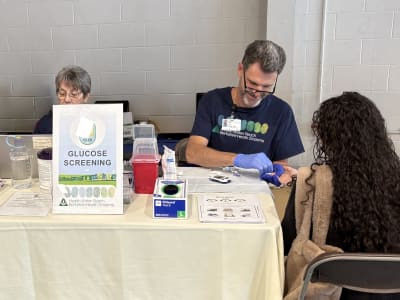
Knowing where you stand with your blood sugar can help you take care of your health with confidence. A simple blood sugar test can provide useful information and help you make informed decisions about your health.
Understanding prediabetes.
Prediabetes means your blood sugar is above the normal range but not yet high enough for a Type 2 diabetes diagnosis. It can be present for years without obvious signs. Finding it early gives you time to talk with your care team and take steps that may prevent or delay Type 2 diabetes.
More than 2 in 5 adults have prediabetes. The good news is that lifestyle changes can lower the risk of developing Type 2 diabetes by about half.
Understanding your risk.
Knowing your risk can help you decide when to talk with your primary care provider about blood sugar testing. Testing may be especially helpful if you are age 45 or older, are overweight, have a parent or sibling with Type 2 diabetes, or are physically active fewer than three times a week. Your risk may also be higher if you had diabetes during pregnancy, delivered a baby weighing more than 9 pounds, or have polycystic ovary syndrome. Some racial and ethnic groups also have a higher risk.
A simple test can help you understand your health.

A blood sugar test can show whether your levels are in the normal, prediabetes, or diabetes range. The results can help you and your care team decide what support, if any, would be helpful. Ask your primary care provider if testing is right for you. Screenings may also be available at community health events.
Small steps can support your health.
If testing shows that you have prediabetes, you have time to act. Losing even 5% to 7% of your body weight and getting regular activity can lower your risk of Type 2 diabetes. A helpful goal is 150 minutes of activity each week, such as brisk walking. You do not have to change everything at once. Start with a step that feels manageable and ask your care team to help you choose an approach that fits your health, routines, and goals.
Support is available at every stage.
Whether you are learning about your risk, living with prediabetes, or managing diabetes, you do not have to do it alone. Berkshire Health Systems offers diabetes self-management education with personalized guidance from registered nurses and dietitians. Working with a care team can help you understand your numbers, make informed choices, and build habits that support a healthy, active life.
Start with a conversation.
Talk with your primary care provider about your diabetes risk and whether blood sugar testing is right for you. If you need a primary care provider, use the Berkshire Health Systems Primary Care Provider Access Form to connect with care.
This information is for educational purposes only and is not medical advice. Always consult a healthcare professional for diagnosis and treatment.
All facts in this article were gathered by writers employed by Berkshire Health Systems. Artificial intelligence tools were used to reformat information for clarity and presentation. This information is fact-checked by BHS staff before being published.