


Finding Cancer Earlier Can Make a Difference

Lung cancer can develop before you notice symptoms. That is why, for people at higher risk, screening can be an important part of staying healthy.
A lung cancer screening uses a low-dose CT scan to look for small spots, called nodules, in the lungs. The scan uses less radiation than a standard CT scan. At Berkshire Health Systems, lung cancer screening is available for people who meet screening guidelines.
Why Lung Cancer Screening Matters
Finding lung cancer earlier can mean more treatment options. Dr. Christian Galvez, a thoracic surgeon at Berkshire Health Systems, helped start the health system’s lung cancer screening program in 2013. He says the program has made a significant difference in when lung cancers are being discovered.
-
Dr. Christian Galvez-Padilla
Thoracic Surgeon
“Two-thirds of the patients were found in stage one and two, where they can still be cured. So lung cancer screening works.”

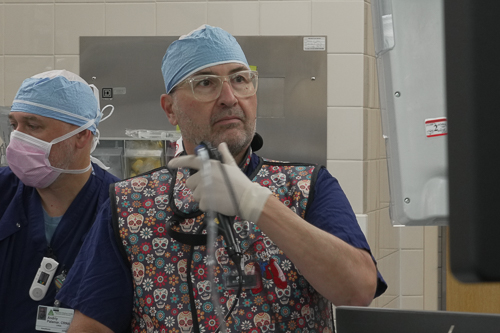
The screening program has grown significantly since it began. More than 3,500 screening scans were performed in 2024, according to Berkshire Health Systems.
Who Should Talk to Their Provider About Screening?
Lung cancer screening is not recommended for everyone.
Current recommendations discussed by Dr. Galvez call for annual low-dose CT screening for certain adults ages 50 to 80 who have a significant smoking history and currently smoke or quit within the past 15 years.
Your smoking history is measured in pack-years. For example, smoking one pack a day for 20 years equals 20 pack-years. Smoking two packs a day for 10 years also equals 20 pack-years.
If you have smoked and aren’t sure whether you qualify, start with a simple question for your healthcare provider: “Should I be screened for lung cancer?”
What Happens If the Scan Finds Something?
An abnormal screening result does not automatically mean you have cancer.
According to Dr. Galvez, doctors look at things such as the size, location and appearance of a lung nodule to determine what should happen next. Many patients only need another CT scan after a recommended period so their care team can watch for changes.
Only a small percentage of patients in the Berkshire Health Systems screening program require a biopsy or another invasive procedure.
If a spot needs a closer look, newer technology is helping physicians reach areas of the lung that were once difficult to access.
New Technology Is Helping Doctors Get Answers
Berkshire Health Systems uses robotic-assisted bronchoscopy to reach and biopsy small nodules, including those in hard-to-reach areas of the lungs. The technology allows doctors to navigate through the airways to collect a small tissue sample that can be examined for cancer. It can reach areas physicians could not reach with traditional bronchoscopy and obtain a biopsy to help determine what a suspicious spot is.
The goal is straightforward: get better information so the care team can determine the right next step.
Screening Is Only Part of Protecting Your Lungs

If you smoke, quitting remains one of the most important things you can do for your lung health. Smoking is linked to most lung cancer cases, although people who have never smoked can also develop lung cancer.
And quitting does not mean screening should immediately stop. People who otherwise meet screening criteria may continue to be eligible after they quit.
Take the Next Step
You don’t need to wait for symptoms to talk about lung cancer screening.
If you are between ages 50 and 80 and have a history of smoking, ask your primary care provider whether a low-dose CT lung cancer screening is right for you. Your provider can review your smoking and health history and help determine whether you qualify.
Finding lung cancer earlier can make a difference. Starting the conversation with your healthcare provider can be the first step.
This information is for educational purposes only and is not medical advice. Always consult a healthcare professional for diagnosis and treatment.
All facts in this article were gathered by writers employed by Berkshire Health Systems. Artificial intelligence tools were used to reformat information for clarity and presentation. This information is fact-checked by BHS staff before being published.
Learn More About Lung Cancer Screening
Join Dr. Christian Galvez and Dr. Rebecca Caine on the Berkshire Health Program for a conversation about lung cancer screening, early detection, and new technology helping doctors get answers.
Talk with your Primary Care Provider about your risk or call Dr. Galvez’s office at 413-445-6420